Category: HISTORY

  • Here are some of the most notable Afro-Caribbean filmmakers

    Here are some of the most notable Afro-Caribbean filmmakers


    The Afro-Caribbean film industry has produced many influential filmmakers who have made significant contributions to global cinema. Here are some of the most notable Afro-Caribbean filmmakers:


    1. Perry Henzell (Jamaica)

    • Best Known For: The Harder They Come (1972)
    • Regarded as Jamaica’s first feature filmmaker, Henzell’s film introduced reggae music and Caribbean storytelling to a global audience.

    2. Euzhan Palcy (Martinique)

    • Best Known For: Sugar Cane Alley (1983), A Dry White Season (1989)
    • First Black woman to direct a Hollywood film (A Dry White Season), which starred Marlon Brando.

    3. Isaac Julien (UK/Saint Lucia)

    • Best Known For: Looking for Langston (1989), Young Soul Rebels (1991)
    • A British filmmaker of Saint Lucian descent, known for blending art, activism, and storytelling about Black identity and history.

    4. Raoul Peck (Haiti)

    • Best Known For: I Am Not Your Negro (2016), Lumumba (2000)
    • A globally recognized Haitian filmmaker and former Minister of Culture in Haiti, known for his powerful documentaries and historical dramas.

    5. Steve McQueen (UK/Grenada & Trinidad)

    • Best Known For: 12 Years a Slave (2013), Small Axe (2020)
    • Born to Grenadian and Trinidadian parents, McQueen won an Oscar for Best Picture for 12 Years a Slave.

    6. Cécile Emeke (UK/Jamaica)

    • Best Known For: Strolling (2014), Ackee & Saltfish (2015)
    • A rising British-Jamaican filmmaker known for exploring Afro-Caribbean identity and diaspora experiences.

    7. Frances-Anne Solomon (Trinidad & Tobago)

    • Best Known For: A Winter Tale (2007), Hero: Inspired by the Extraordinary Life of Mr. Ulric Cross (2019)
    • Founder of the CaribbeanTales International Film Festival and a leading voice in Caribbean cinema.

    8. Chris Browne (Jamaica)

    • Best Known For: Third World Cop (1999)
    • His films showcase Jamaican culture, crime, and politics, with Third World Cop being one of the country’s most successful films.

    9. Martine Chartrand (Haiti/Canada)

    • Best Known For: Black Soul (2000)
    • An award-winning Haitian-Canadian filmmaker known for animated storytelling about Black history.

    10. Storm Saulter (Jamaica)

    • Best Known For: Better Mus’ Come (2010), Sprinter (2018)
    • A leading figure in new-generation Caribbean cinema, blending social issues with compelling narratives.

    Conclusion

    Afro-Caribbean filmmakers have played a major role in global cinema, from documenting Black history to showcasing Caribbean culture and diaspora experiences.

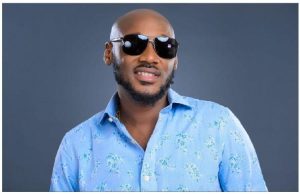
  • 2Baba (2Face Idibia) – Full Biography and Career Overview

    2Baba (2Face Idibia) – Full Biography and Career Overview


    2Baba (2Face Idibia) – Full Biography and Career Overview


    2Baba (2Face Idibia) – Full Biography and Career Overview

    Early Life & Education

    • Real Name: Innocent Ujah Idibia
    • Stage Names: 2Face Idibia (formerly), now 2Baba
    • Born: September 18, 1975
    • Place of Birth: Jos, Plateau State, Nigeria
    • State of Origin: Benue State (Idoma ethnic group)
    • Education: Attended the Institute of Management & Technology (IMT), Enugu, but dropped out to pursue music.

    Music Career

    Plantashun Boiz Era (1997–2004)

    • 2Baba started his career as part of the R&B group Plantashun Boiz with Blackface and Faze.
    • They released two albums:
      • Body & Soul (2000)
      • Sold Out (2003)
    • The group later disbanded in 2004, leading to his solo career.

    Solo Career & Breakthrough (2004–2007)

    • Debut Album: Face 2 Face (2004)
      • Featured the international hit “African Queen”, which became one of Africa’s biggest love songs.
      • The song was also featured in the Hollywood movie Phat Girlz (2006).
    • Second Album: Grass 2 Grace (2006)
      • Hit songs: True Love, For Instance, See Me So.
      • Won multiple awards, solidifying his status as Nigeria’s top artist.

    International Success (2009–2014)

    • Signed with Hypertek Entertainment after leaving Kennis Music.
    • Released several successful albums, including:
      • The Unstoppable (2009) – Included the hit Enter the Place.
      • Away & Beyond (2012) – Featured Rainbow and Ihe Neme.
      • The Ascension (2014) – Featured Let Somebody Love You.

    Later Career & Legacy (2015–Present)

    • In 2016, 2Baba officially changed his name from 2Face to 2Baba.
    • Released several singles and collaborations, maintaining relevance in the industry.
    • Recognized as a legend in Afrobeats and one of the most influential Nigerian musicians.

    Activism & Philanthropy

    • Advocates for good governance, peace, and youth empowerment.
    • Led protests against corruption in Nigeria.
    • Runs the 2Baba Foundation, focusing on education and social causes.

    Awards & Achievements

    • First African artist to win MTV Europe Music Award (2005).
    • Multiple Headies Awards and MTV Africa Music Awards (MAMAs).
    • BET Award for Best International Act (2011).

    Personal Life

    • Married to Annie Idibia, with whom he has children.
    • Known for his large family, fathering children from multiple relationships.

    Legacy

    2Baba remains one of Africa’s greatest musicians, pioneering the Afrobeats movement and inspiring generations of artists

  • Falz,Below is a detailed overview of his life and career


    Falz, whose real name is Folarin Falana, is a Nigerian rapper, singer, songwriter, and actor known for his witty lyrics, social activism, and unique style. Below is a detailed overview of his life and career:


    Early Life & Education

    • Full Name: Folarin Falana
    • Born: October 27, 1990
    • Place of Birth: Lagos, Nigeria
    • Parents: Femi Falana (renowned human rights lawyer) and Funmi Falana
    • Education:
      • Attended St. Leo’s Catholic Primary School and Olashore International School.
      • Studied Law at the University of Reading, UK and was called to the Nigerian Bar in 2012 after attending the Nigeria Law School.

    Music Career

    Falz started his music career while still in school, forming a group called “The School Boys” before officially going solo.

    Breakthrough & Albums

    1. “Wazup Guy” (2014) – His debut album, featuring hits like Cool Parry.
    2. “Stories That Touch” (2015) – Included hit songs like Soldier (feat. Simi) and Karishika, which gained him widespread recognition.
    3. “27” (2017) – A surprise album featuring songs like Something Light, La Fête, and Wehdone Sir.
    4. “Moral Instruction” (2019) – A socially conscious album addressing political and social issues in Nigeria.
    5. “BAHD” (2022) – A mix of Afropop and R&B, showing a different side of his artistry.

    Acting & Comedy Career

    Falz is known for his humorous personality and alter ego, Brother Taju, which he showcases in skits and social media.

    • He starred in Nollywood films such as:
      • Jenifa’s Diary (TV series)
      • Merry Men: The Real Yoruba Demons
      • Chief Daddy
      • Quam’s Money

    He won the Best Actor in a Comedy Award at the AMVCA (Africa Magic Viewers’ Choice Awards) in 2016.


    Social Activism & Influence

    • Falz is known for speaking up on social and political issues in Nigeria.
    • His 2018 song “This Is Nigeria” (a remake of Childish Gambino’s This Is America) highlighted corruption, police brutality, and societal issues.
    • He was actively involved in the #EndSARS movement against police brutality in Nigeria (2020).

    Awards & Achievements

    • Best Rap Act at Headies Awards
    • Best Actor at AMVCA
    • Viewer’s Choice Best International Act at BET Awards (2019)

    Conclusion

    Falz is not just a musician but also a social activist, actor, and comedian who uses his platform to entertain, educate, and challenge the status quo

  • Spain’s history, covering its major historical periods

    Spain’s history, covering its major historical periods


    Spain has a long and complex history, stretching from prehistoric times to the present day. Below is a detailed overview of Spain’s history, covering its major historical periods.


    Prehistoric and Ancient Spain (Before 711 AD)

    Prehistoric Settlements

    • Early human presence in Spain dates back over 1.2 million years, with evidence from sites like Atapuerca.
    • The Iberians, Celts, and Tartessians were among the early inhabitants.

    Phoenician, Greek, and Carthaginian Influence (1000–218 BC)

    • Phoenicians and Greeks established trading colonies (e.g., Cádiz and Emporion).
    • The Carthaginians expanded their influence in Spain before the Punic Wars with Rome.

    Roman Hispania (218 BC – 476 AD)

    • Rome conquered Spain after defeating Carthage in the Second Punic War.
    • Roman rule brought roads, aqueducts, Latin language, and Christianity.
    • Spain became fully Romanized and a vital part of the empire.

    Visigothic Kingdom (476–711 AD)

    • After Rome’s fall, the Visigoths, a Germanic people, established a kingdom in Spain.
    • Catholicism became the dominant religion.

    Islamic Spain (711–1492)

    The Umayyad Conquest (711–718)

    • Muslim forces, led by Tariq ibn Ziyad, defeated the Visigoths.
    • Most of Spain became part of the Islamic Al-Andalus.

    Al-Andalus and the Reconquista (8th–15th Century)

    • Islamic Spain flourished, especially in Córdoba, which became a center of learning and culture.
    • Christian kingdoms in the north began reconquering Muslim territories (the Reconquista).
    • The Christian kingdoms of Castile, Aragon, and Portugal expanded southward.

    Fall of Granada (1492)

    • The last Muslim kingdom, Granada, fell to Ferdinand and Isabella, completing the Reconquista.
    • Jews and Muslims faced forced conversions or expulsion.

    The Spanish Empire (1492–1898)

    The Age of Exploration (15th–17th Century)

    • Christopher Columbus, sponsored by Spain, reached the Americas in 1492.
    • Spain established a vast empire across the Americas, Asia, and Europe.

    Golden Age (16th–17th Century)

    • Spain became the most powerful European nation under Charles I (Charles V of the Holy Roman Empire) and Philip II.
    • Wealth from the Americas fueled art, science, and military expansion.
    • Conflicts, including wars with England and the Eighty Years’ War (Dutch Revolt), weakened Spain.

    Decline of the Empire (17th–18th Century)

    • Spain suffered military defeats, economic troubles, and the rise of competing European powers.
    • The War of Spanish Succession (1701–1714) ended with Philip V, the first Bourbon king, taking the throne.

    19th Century: Wars and Instability

    • Napoleonic Wars (1808–1814): Napoleon invaded Spain, leading to the Peninsular War and a national uprising.
    • Spain lost most of its American colonies by the 1820s.
    • The 19th century was marked by political instability, civil wars, and conflicts between liberals and conservatives.

    20th Century: Civil War and Franco’s Dictatorship (1936–1975)

    Spanish Civil War (1936–1939)

    • A conflict between the Republicans (leftists, communists, and anarchists) and the Nationalists (conservatives, fascists, and monarchists).
    • Francisco Franco, leader of the Nationalists, won and established a dictatorship.

    Franco’s Rule (1939–1975)

    • Spain was isolated after World War II but later allied with the U.S. during the Cold War.
    • Economic reforms in the 1950s–60s modernized Spain.

    Modern Spain (1975–Present)

    Transition to Democracy (1975–1982)

    • Franco died in 1975; King Juan Carlos I led Spain’s transition to democracy.
    • A new democratic constitution was established in 1978.

    EU Membership and Economic Growth (1986–Present)

    • Spain joined the European Union (1986), boosting its economy.
    • The country faced challenges, including the 2008 financial crisis and separatist movements (e.g., Catalonia).

    Current Era

    • Spain remains a constitutional monarchy with King Felipe VI and a parliamentary government.
    • Challenges include economic recovery, political tensions, and regional independence movements.

    Conclusion

    Spain’s history is one of conquests, cultural exchanges, and global influence, shaping the modern nation it is today

  • Nigeria’s history, from ancient civilizations to modern times

    Nigeria’s history, from ancient civilizations to modern times


    Nigeria’s history is vast and complex, spanning thousands of years from prehistoric times to the present. Below is a comprehensive overview of Nigeria’s history, from ancient civilizations to modern times.


    Ancient and Pre-Colonial Nigeria (Pre-1500s)

    Nigeria has been home to diverse ethnic groups and civilizations for thousands of years. Archaeological evidence suggests human habitation as early as 9000 BC.

    Early Civilizations

    1. Nok Culture (1500 BC – 500 AD)
      • One of the earliest known civilizations in Nigeria.
      • Famous for its terracotta sculptures and early ironworking technology.
      • Located in present-day central Nigeria.
    2. Igbo-Ukwu Civilization (9th Century AD)
      • Known for advanced bronze and copper metalwork.
      • One of the earliest complex societies in West Africa.
    3. Yoruba Kingdoms (11th – 19th Century)
      • Ile-Ife: Considered the spiritual homeland of the Yoruba people. Famous for its sophisticated bronze and terracotta art.
      • Oyo Empire: A powerful kingdom that expanded through military conquest and trade.
      • Benin Kingdom: Known for its advanced administration and bronze artwork.
    4. Hausa City-States (11th – 19th Century)
      • Located in northern Nigeria, including Kano, Katsina, and Zaria.
      • Influenced by Islam after the 11th century due to trans-Saharan trade.
    5. Kanem-Bornu Empire (9th – 19th Century)
      • A powerful empire in the northeastern region.
      • Islam became prominent in the 11th century.

    Colonial Era (19th – 20th Century)

    British Influence and Annexation

    • European contact began with Portuguese traders in the 15th century.
    • The transatlantic slave trade (16th – 19th century) saw millions of Africans, including Nigerians, taken to the Americas.
    • Britain abolished the slave trade in the 19th century and shifted to economic control over Nigeria.

    British Conquest (1850s – 1914)

    • Lagos was annexed by the British in 1861.
    • The British expanded their rule through military campaigns.
    • In 1914, the Northern and Southern Protectorates were merged to form Colonial Nigeria.

    Independence and Post-Colonial Era (1960 – Present)

    Independence and First Republic (1960 – 1966)

    • Nigeria gained independence from Britain on October 1, 1960.
    • Became a republic in 1963, with Nnamdi Azikiwe as the first President.
    • Political instability arose due to ethnic tensions.

    Military Coups and Civil War (1966 – 1970)

    • In 1966, Nigeria experienced two military coups.
    • The Eastern Region, led by Colonel Odumegwu Ojukwu, declared independence as the Republic of Biafra in 1967.
    • The Nigerian Civil War (1967–1970) ended with Biafra’s defeat.

    Military Rule and Transition to Democracy (1970 – 1999)

    • Several military regimes ruled Nigeria, including those of General Gowon, Murtala Mohammed, Olusegun Obasanjo, Buhari, Babangida, and Abacha.
    • Democracy was restored in 1999, with Olusegun Obasanjo elected as the first civilian president after decades of military rule.

    Modern Nigeria (1999 – Present)

    • Nigeria has remained a democratic nation since 1999.
    • The country has faced economic challenges, corruption, and security threats, including the Boko Haram insurgency.
    • Recent presidents include Umaru Yar’Adua, Goodluck Jonathan, Muhammadu Buhari, and the current president Bola Ahmed Tinubu (elected in 2023).

    Conclusion

    Nigeria’s history is rich, spanning from ancient civilizations to colonial rule and modern democracy. The country remains a key player in Africa’s economy and politics.

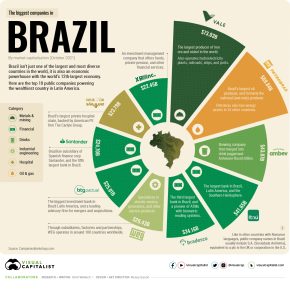
  • Most Popular Jobs In Brazil


    In Brazil, the retail and trade sector is the largest employer, with over 13 million people employed in 2022.

    Other significant industries include agriculture, banking, oil and gas, and hospitality.

    In terms of specific professions, engineering fields such as civil, electrical, environmental, and oil and gas are prominent. The average salary for an engineer in Brazil is around R$10,000, with oil engineers earning between R$15,000 and R$60,000.

    Information technology roles, including software engineers, data scientists, web developers, business analysts, financial analysts, and marketing analysts, are also in demand.

    Additionally, due to a high level of poverty, there are many employment opportunities in social services fields.

    It’s important to note that the Brazilian job market is diverse, with opportunities varying across different sectors and regions.

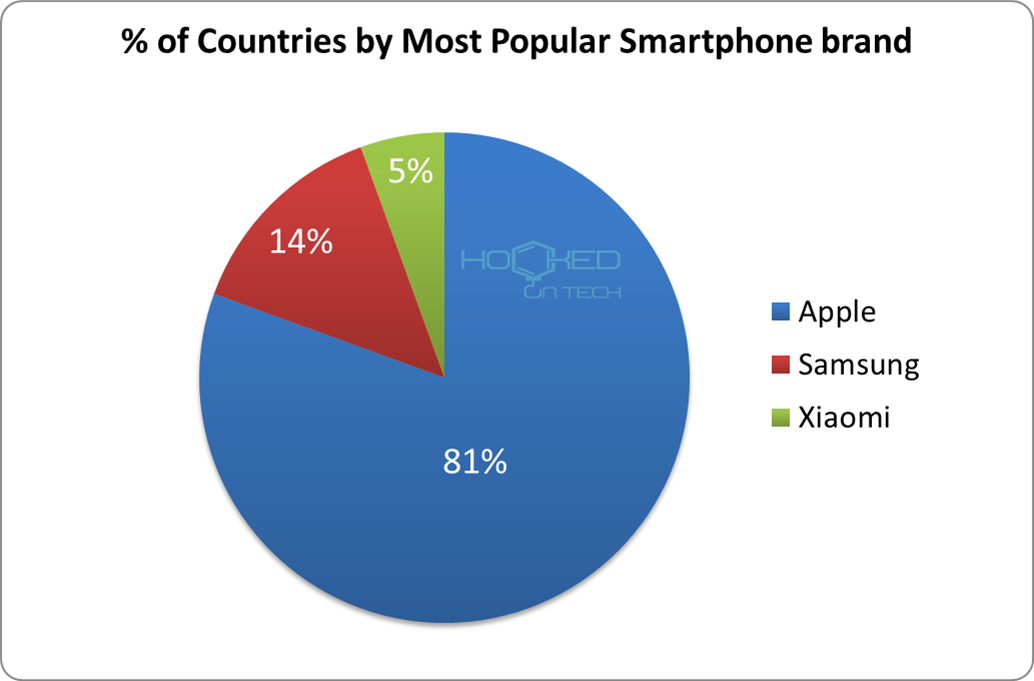
  • Here’s an overview of the most popular smartphone brands by continent

    Here’s an overview of the most popular smartphone brands by continent


    The popularity of mobile phone brands varies significantly across different continents, influenced by factors such as consumer preferences, economic conditions, and regional brand presence. Here’s an overview of the most popular smartphone brands by continent:

    North America:

    • Apple: Dominates the North American market, particularly in the United States and Canada. In the U.S., Apple holds a market share of approximately 51.07%, while in Canada, it commands around 60.38%.
    • Samsung: Holds the second position, with a market share of about 23.77% in the U.S. and 24.23% in Canada.

    Europe:

    • Apple: Leads with a market share of 36.53%.
    • Samsung: Follows closely with 31.12%.
    • Xiaomi: Holds a significant share at 12.95%.

    Asia:

    • Apple: In the third quarter of 2024, Apple was the leading mobile phone vendor in Asia, holding more than 19% of the market share.
    • Samsung: Maintains a strong presence across various Asian markets.
    • Xiaomi: Particularly popular in countries like India and China.

    Africa:

    • Transsion Holdings (Tecno, Infinix, itel): Dominates the African market with brands like Tecno, Infinix, and itel, offering affordable smartphones tailored to local needs. For instance, Tecno holds a 26.49% market share in Nigeria.
    • Samsung: Also holds a significant market share in various African countries.

    South America:

    • Samsung: Leads in many South American countries due to its wide range of devices catering to different economic segments.
    • Motorola: Has a notable presence, especially in countries like Brazil.

    Oceania:

    • Apple: Holds a significant market share in countries like Australia and New Zealand.
    • Samsung: Also popular, offering a range of devices suited to various consumer preferences.

    It’s important to note that market dynamics are continually evolving, with brands like Xiaomi, Oppo, and Vivo expanding their global reach and increasing their market shares in various regions.

  • the earliest independent nations in the Caribbean with significant African-descended populations


    The first independent Afro-Caribbean nations gained freedom primarily in the 19th and 20th centuries, breaking away from European colonial rule. Here are the earliest independent nations in the Caribbean with significant African-descended populations:
    1. Haiti – 1804
      • The first independent Afro-Caribbean nation and the first post-colonial Black-led republic in the world.
      • Achieved independence from France after a successful slave revolt led by Toussaint Louverture, Jean-Jacques Dessalines, and others.
    2. Dominican Republic – 1844
      • Gained independence from Haiti (which had occupied it since 1822) and later had to fight for sovereignty from Spain again in 1865.
    3. Cuba – 1902
      • Won independence from Spain after the Spanish-American War, though under heavy U.S. influence.
    4. Jamaica – 1962
      • Became independent from Britain, marking a significant step in the decolonization of the Caribbean.
    5. Trinidad and Tobago – 1962
      • Gained independence from Britain, becoming a sovereign republic in 1976.
    6. Barbados – 1966
      • Became independent from Britain and later transitioned to a republic in 2021.
    7. Guyana – 1966
      • Though on the South American mainland, it has strong Afro-Caribbean cultural ties and gained independence from Britain.
    8. The Bahamas – 1973
      • Achieved independence from Britain, with a significant African-descended population.

    These nations led the way for further independence movements across the Caribbean.

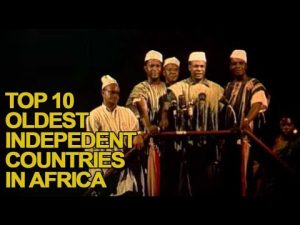
  • Here are the earliest independent African countries:

    Here are the earliest independent African countries:

    The first independent countries in Africa emerged in the mid-20th century as nations gained freedom from colonial rule. Here are the earliest independent African countries:

    Liberia – 1847 (Founded by freed African Americans, it was never colonized in the same way as others.)
    Egypt – 1922 (Gained partial independence from Britain; full sovereignty came later.)
    Ethiopia – Remained independent (Briefly occupied by Italy from 1936-1941 but was never fully colonized.)
    Libya – 1951 (First African country to gain independence from Italy.)
    Sudan – 1956 (From joint British-Egyptian rule.)
    Morocco – 1956 (From France and Spain.)
    Tunisia – 1956 (From France.)
    Ghana – 1957 (First sub-Saharan African country to gain independence from Britain.)
    These countries paved the way for the wave of decolonization that swept Africa in the 1960s, leading to independence for many more nations

  • states in Nigeria with the highest oil production and their contributions

    states in Nigeria with the highest oil production and their contributions


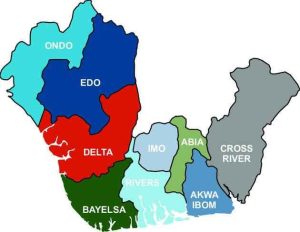
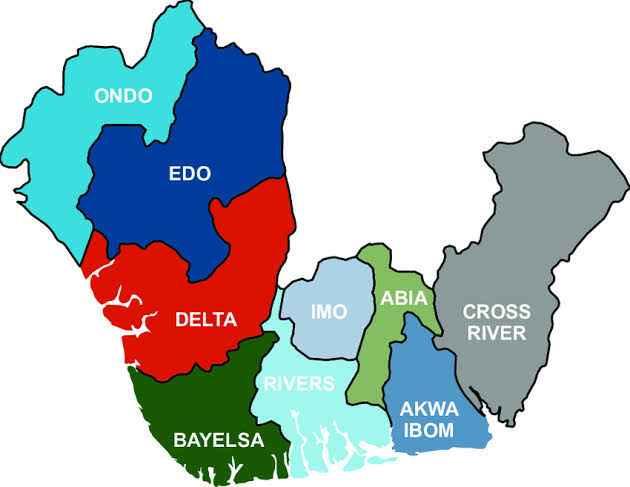
    Nigeria is one of the largest oil producers in Africa, and its crude oil production is concentrated in the Niger Delta region, which is in the southern part of the country. Below are the states in Nigeria with the highest oil production and their contributions:


    1. Akwa Ibom

    • Production Contribution: ~31% of Nigeria’s total crude oil output.
    • Key Features:
      • Akwa Ibom is the largest oil-producing state in Nigeria.
      • It has numerous offshore oil fields.
      • The state’s oil revenue contributes significantly to its economy.

    2. Delta

    • Production Contribution: ~21% of Nigeria’s total crude oil output.
    • Key Features:
      • Delta State is home to large reserves of both onshore and offshore oil.
      • It hosts the Forcados Oil Terminal and the Escravos Gas Plant.
      • The state also benefits from natural gas production.

    3. Rivers

    • Production Contribution: ~21% of Nigeria’s total crude oil output.
    • Key Features:
      • Rivers State is home to the famous Port Harcourt Refinery.
      • It has many oil fields, terminals, and processing facilities.
      • The state has been central to Nigeria’s oil history.

    4. Bayelsa

    • Production Contribution: ~18% of Nigeria’s total crude oil output.
    • Key Features:
      • Bayelsa is one of the core states in the Niger Delta.
      • It is home to the Oloibiri oil field, where oil was first discovered in commercial quantity in 1956.
      • The state has vast swamps and creeks used for oil exploration.

    5. Ondo

    • Production Contribution: ~3% of Nigeria’s total crude oil output.
    • Key Features:
      • Ondo is the largest oil-producing state in southwestern Nigeria.
      • It produces oil mainly from offshore fields.
      • The state is also known for its bitumen deposits.

    6. Edo

    • Production Contribution: ~2% of Nigeria’s total crude oil output.
    • Key Features:
      • Edo State produces oil from onshore fields.
      • It also contributes to natural gas production.
      • The state benefits from oil-related economic activities.

    7. Imo

    • Production Contribution: ~1% of Nigeria’s total crude oil output.
    • Key Features:
      • Imo State has several marginal oil fields.
      • It plays a small but significant role in oil production.
      • Oil exploration is concentrated in areas like Ohaji/Egbema.

    8. Abia

    • Production Contribution: ~0.68% of Nigeria’s total crude oil output.
    • Key Features:
      • Abia State produces oil from onshore wells.
      • Oil exploration is focused in areas like Ukwa West and Owaza.

    9. Lagos

    • Production Contribution: ~0.5% of Nigeria’s total crude oil output.
    • Key Features:
      • Lagos recently joined the list of oil-producing states.
      • Crude oil is mainly produced from offshore fields in areas like Aje.
      • The state’s offshore oil potential is still being developed.

    Summary of Oil-Producing States and Contribution

    State % Contribution to Oil Production
    Akwa Ibom ~31%
    Delta ~21%
    Rivers ~21%
    Bayelsa ~18%
    Ondo ~3%
    Edo ~2%
    Imo ~1%
    Abia ~0.68%
    Lagos ~0.5%

    Key Notes:

    1. Akwa Ibom, Delta, Rivers, and Bayelsa dominate oil production, collectively contributing over 90% of Nigeria’s crude oil.
    2. The Niger Delta region is the heart of Nigeria’s oil industry due to its vast oil reserves.
    3. Natural gas production is also significant in many of these states, especially in Rivers, Delta, and Akwa Ibom.
    4. Oil production has brought wealth but also environmental challenges, particularly in the Niger Delta.