




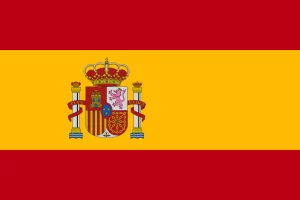
Spain has a long and complex history, stretching from prehistoric times to the present day. Below is a detailed overview of Spain’s history, covering its major historical periods.
Prehistoric and Ancient Spain (Before 711 AD)
Prehistoric Settlements
- Early human presence in Spain dates back over 1.2 million years, with evidence from sites like Atapuerca.
- The Iberians, Celts, and Tartessians were among the early inhabitants.
Phoenician, Greek, and Carthaginian Influence (1000–218 BC)
- Phoenicians and Greeks established trading colonies (e.g., Cádiz and Emporion).
- The Carthaginians expanded their influence in Spain before the Punic Wars with Rome.
Roman Hispania (218 BC – 476 AD)
- Rome conquered Spain after defeating Carthage in the Second Punic War.
- Roman rule brought roads, aqueducts, Latin language, and Christianity.
- Spain became fully Romanized and a vital part of the empire.
Visigothic Kingdom (476–711 AD)
- After Rome’s fall, the Visigoths, a Germanic people, established a kingdom in Spain.
- Catholicism became the dominant religion.
Islamic Spain (711–1492)
The Umayyad Conquest (711–718)
- Muslim forces, led by Tariq ibn Ziyad, defeated the Visigoths.
- Most of Spain became part of the Islamic Al-Andalus.
Al-Andalus and the Reconquista (8th–15th Century)
- Islamic Spain flourished, especially in Córdoba, which became a center of learning and culture.
- Christian kingdoms in the north began reconquering Muslim territories (the Reconquista).
- The Christian kingdoms of Castile, Aragon, and Portugal expanded southward.
Fall of Granada (1492)
- The last Muslim kingdom, Granada, fell to Ferdinand and Isabella, completing the Reconquista.
- Jews and Muslims faced forced conversions or expulsion.
The Spanish Empire (1492–1898)
The Age of Exploration (15th–17th Century)
- Christopher Columbus, sponsored by Spain, reached the Americas in 1492.
- Spain established a vast empire across the Americas, Asia, and Europe.
Golden Age (16th–17th Century)
- Spain became the most powerful European nation under Charles I (Charles V of the Holy Roman Empire) and Philip II.
- Wealth from the Americas fueled art, science, and military expansion.
- Conflicts, including wars with England and the Eighty Years’ War (Dutch Revolt), weakened Spain.
Decline of the Empire (17th–18th Century)
- Spain suffered military defeats, economic troubles, and the rise of competing European powers.
- The War of Spanish Succession (1701–1714) ended with Philip V, the first Bourbon king, taking the throne.
19th Century: Wars and Instability
- Napoleonic Wars (1808–1814): Napoleon invaded Spain, leading to the Peninsular War and a national uprising.
- Spain lost most of its American colonies by the 1820s.
- The 19th century was marked by political instability, civil wars, and conflicts between liberals and conservatives.
20th Century: Civil War and Franco’s Dictatorship (1936–1975)
Spanish Civil War (1936–1939)
- A conflict between the Republicans (leftists, communists, and anarchists) and the Nationalists (conservatives, fascists, and monarchists).
- Francisco Franco, leader of the Nationalists, won and established a dictatorship.
Franco’s Rule (1939–1975)
- Spain was isolated after World War II but later allied with the U.S. during the Cold War.
- Economic reforms in the 1950s–60s modernized Spain.
Modern Spain (1975–Present)
Transition to Democracy (1975–1982)
- Franco died in 1975; King Juan Carlos I led Spain’s transition to democracy.
- A new democratic constitution was established in 1978.
EU Membership and Economic Growth (1986–Present)
- Spain joined the European Union (1986), boosting its economy.
- The country faced challenges, including the 2008 financial crisis and separatist movements (e.g., Catalonia).
Current Era
- Spain remains a constitutional monarchy with King Felipe VI and a parliamentary government.
- Challenges include economic recovery, political tensions, and regional independence movements.
Conclusion
Spain’s history is one of conquests, cultural exchanges, and global influence, shaping the modern nation it is today