
Category: HISTORY

  • Leading Companies in the Afro-Caribbean Nations

    Leading Companies in the Afro-Caribbean Nations


    The Afro-Caribbean region boasts a diverse economic landscape, with several leading companies contributing significantly to their respective national economies. Here’s an overview of some prominent companies and the employment rates within the region:

    Leading Companies in the Afro-Caribbean Nations

    1. NCB Financial Group Ltd. (Jamaica)
      • A major financial institution offering a range of banking and financial services across the Caribbean.
    2. Banks DIH Ltd. (Guyana)
      • A conglomerate involved in brewing, bottling, and retail operations, serving as a significant employer in Guyana.
    3. Demerara Distillers Ltd. (Guyana)
      • Renowned for producing El Dorado Rum, this company plays a vital role in Guyana’s manufacturing sector.
    4. Republic Bank Guyana Ltd. (Guyana)
      • A leading commercial bank providing comprehensive banking services throughout Guyana.
    5. St. Kitts-Nevis-Anguilla National Bank Ltd. (St. Kitts and Nevis)
      • The largest bank in the Federation, offering various financial services to the local population.
    6. Jamaica Broilers Group Limited (Jamaica)
      • A key player in the agricultural sector, specializing in poultry production and related agricultural activities.
    7. Supreme Ventures Limited (Jamaica)
      • A prominent gaming and lottery company contributing significantly to Jamaica’s entertainment and leisure industry.
    8. Lasco Manufacturing Limited (Jamaica)
      • Involved in the manufacturing of a wide range of consumer products, including food items and beverages.
    9. Guyana Bank for Trade & Industry Ltd. (Guyana)
      • A major financial institution in Guyana, offering various banking services to individuals and businesses.
    10. Stanley Motta Limited (Jamaica)
      • Engaged in property development and management, contributing to Jamaica’s real estate sector.

    These companies are among the top performers in the Caribbean, with revenues reflecting their substantial impact on the regional economy.

    Employment Rates in the Afro-Caribbean Region

    Employment rates in the Caribbean vary by country and are influenced by factors such as economic structure, tourism dependency, and external economic conditions. According to a report by the Economic Commission for Latin America and the Caribbean (ECLAC), the unemployment rate in the Caribbean increased from 10.4% in 2019 to 12.2% in 2022. For instance, Trinidad and Tobago experienced a rise in unemployment from 3.4% in 2019 to 4.8% in 2021, while Saint Vincent and the Grenadines saw an increase from 19.3% to 21.6% over the same period.

    It’s important to note that these figures can fluctuate due to various factors, including economic policies, global market trends, and natural events affecting the region.
     

  • Here are some key cultural aspects practiced in Afro-Caribbean nations

    Here are some key cultural aspects practiced in Afro-Caribbean nations


    The Afro-Caribbean nations have rich and diverse cultures that blend African, Indigenous, and European influences. These cultures manifest in various ways, including religion, music, dance, festivals, language, cuisine, and traditional beliefs. Here are some key cultural aspects practiced in Afro-Caribbean nations:

    1. Religion and Spirituality

    • Afro-Caribbean Religions: Many Afro-Caribbean nations practice syncretic religions that blend African traditions with Christianity, such as:
      • Vodou (Voodoo) – Practiced in Haiti, influenced by West African Vodun and Catholicism.
      • Santería – Popular in Cuba, merging Yoruba deities (Orishas) with Catholic saints.
      • Obeah – A spiritual and healing practice found in Jamaica, Trinidad, and the Bahamas.
      • Rastafarianism – Originating in Jamaica, this faith reveres Emperor Haile Selassie of Ethiopia and emphasizes African identity and resistance to oppression.

    2. Music and Dance

    • Reggae – Originating in Jamaica, with legends like Bob Marley spreading its messages of social justice and Rastafari teachings.
    • Calypso & Soca – Vibrant music styles from Trinidad and Tobago, known for storytelling and carnival celebrations.
    • Dancehall – A Jamaican genre known for its energetic beats and dance culture.
    • Zouk & Kompa – Dance music from Haiti and the French Caribbean islands.
    • Afro-Cuban Music – Influences from Yoruba drumming and Spanish rhythms create styles like Rumba and Salsa.

    3. Festivals and Carnivals

    • Carnival – A major celebration in many Afro-Caribbean nations, blending African drumming, European masquerade traditions, and Indigenous influences. Major carnivals include:
      • Trinidad and Tobago Carnival – One of the biggest in the world.
      • Crop Over (Barbados) – A festival marking the end of the sugarcane harvest.
      • Junkanoo (Bahamas, Jamaica) – A street parade with African roots.

    4. Language and Creole Culture

    • Many Afro-Caribbean nations speak Creole languages, which blend African, European, and Indigenous influences. Examples include:
      • Haitian Creole (Haiti) – A mix of French and African dialects.
      • Patois (Jamaican Creole) – English-based but heavily influenced by African languages.
      • Lesser Antillean Creole – Spoken in St. Lucia, Dominica, and Guadeloupe.

    5. Cuisine

    • Jerk Cooking (Jamaica) – A method of seasoning and grilling meat with African and Indigenous influences.
    • Rice and Peas (Caribbean-wide) – A staple dish combining African rice-cooking traditions with local ingredients.
    • Callaloo (Trinidad & Tobago, Jamaica, Grenada) – A green vegetable dish with African origins.
    • Fufu and Ground Provision Dishes – Similar to West African fufu, often made from yams or cassava.

    6. Traditional Clothing

    • Many Afro-Caribbean communities wear colorful, African-influenced attire, such as:
      • Madras fabric – A brightly colored plaid material worn in St. Lucia, Dominica, and Martinique.
      • Headwraps and turbans – Used in many islands as a cultural and spiritual expression.

    7. Oral Traditions and Folklore

    • Anansi Stories – Trickster tales of Anansi the Spider, brought from West Africa and still popular in the Caribbean.
    • Duppy Spirits (Jamaican Folklore) – Ghostly spirits influenced by African ancestral beliefs.

    The cultures of Afro-Caribbean nations are deeply rooted in African heritage while incorporating European, Indigenous, and Asian influences. Would you like details on a specific aspect

  • The top 11 African countries projected to experience strong economic performance

    The top 11 African countries projected to experience strong economic performance


    Africa is home to several of the world’s fastest-growing economies, reflecting significant strides in development across the continent. According to projections for 2024, nine African countries are expected to be among the top 20 fastest-growing economies globally.

    The top 11 African countries projected to experience strong economic performance are:

    • Niger: 11.2%
    • Senegal: 8.2%
    • Libya: 7.9%
    • Rwanda: 7.2%
    • Côte d’Ivoire: 6.8%
    • Ethiopia: 6.7%
    • Benin: 6.4%
    • Djibouti: 6.2%
    • Tanzania: 6.1%
    • Togo: 6%
    • Uganda: 6%

    These nations have demonstrated resilience and adaptability, with growth driven by various factors, including:

    • Economic Diversification: Countries like Rwanda and Ethiopia have invested in sectors such as manufacturing and services, reducing reliance on agriculture.
    • Political Stability: Relative political stability in nations like Senegal and Côte d’Ivoire has fostered investor confidence and economic reforms.
    • Infrastructure Development: Significant investments in infrastructure have enhanced trade and connectivity in countries such as Tanzania and Benin.

    It’s important to note that while these growth rates are promising, challenges such as income inequality, political instability, and external economic shocks remain. Sustaining and managing this growth will require continued reforms, investment in human capital, and effective governance.

    Overall, the rapid development of these African nations highlights the continent’s dynamic economic landscape and its potential for future prosperity.

  • Lagos State, since its establishment in 1967 First Ladies, along with their spouses’ tenures

    Lagos State, since its establishment in 1967 First Ladies, along with their spouses’ tenures


    Lagos State, since its establishment in 1967, has had a series of First Ladies who have played significant roles in various social and political initiatives. Below is a chronological list of these First Ladies, along with their spouses’ tenures:

    1. Taiwo Adefunmilayo Lawal
      Spouse: Commodore Adekunle Lawal (Military Administrator)
      Tenure: July 1975 – 1977
    2. Christine Nwanyife Kanu
      Spouse: Commodore Ndubuisi Kanu (Military Administrator)
      Tenure: 1977 – July 1978
    3. Ebitu Ukiwe’s Spouse
      Spouse: Commodore Ebitu Ukiwe (Military Administrator)
      Tenure: July 1978 – October 1979
    4. Abimbola Jakande
      Spouse: Alhaji Lateef Jakande (Civilian Governor)
      Tenure: October 1979 – December 1983
    5. Foluke Mudashiru
      Spouse: Brigadier General Gbolahan Mudasiru (Military Governor)
      Tenure: January 1984 – August 1986
    6. Josephine Akhigbe
      Spouse: Navy Captain Mike Akhigbe (Military Governor)
      Tenure: August 1986 – July 1988
    7. Fatima Raji Rasaki
      Spouse: Brigadier General Raji Rasaki (Military Governor)
      Tenure: July 1988 – January 1992
    8. Lady Doja Otedola
      Spouse: Sir Michael Otedola (Civilian Governor)
      Tenure: January 1992 – November 1993
    9. Omolola Oyinlola
      Spouse: Colonel Olagunsoye Oyinlola (Military Administrator)
      Tenure: December 1993 – August 1996
    10. Munira Marwa
      Spouse: Colonel Mohammed Buba Marwa (Military Administrator)
      Tenure: August 1996 – May 1999
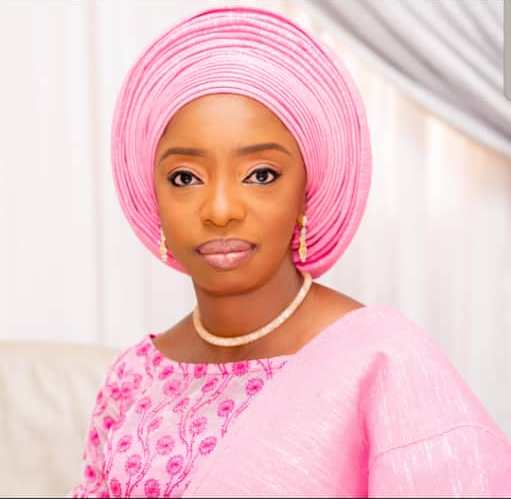
    11. Oluremi Tinubu
      Spouse: Asiwaju Bola Ahmed Tinubu (Civilian Governor)
      Tenure: May 1999 – May 2007
    12. Abimbola Fashola
      Spouse: Babatunde Raji Fashola (Civilian Governor)
      Tenure: May 2007 – May 2015
    13. Bolanle Ambode
      Spouse: Akinwunmi Ambode (Civilian Governor)
      Tenure: May 2015 – May 2019
    14. Ibijoke Sanwo-Olu
      Spouse: Babajide Olusola Sanwo-Olu (Civilian Governor)
      Tenure: May 2019 – Present

    These First Ladies have contributed to various social causes, including women’s rights, healthcare, and education, significantly impacting the development of Lagos State.

  • All Past Lagos State governors, both military and civilian. Here’s a chronological list of these leaders:

    All Past Lagos State governors, both military and civilian. Here’s a chronological list of these leaders:


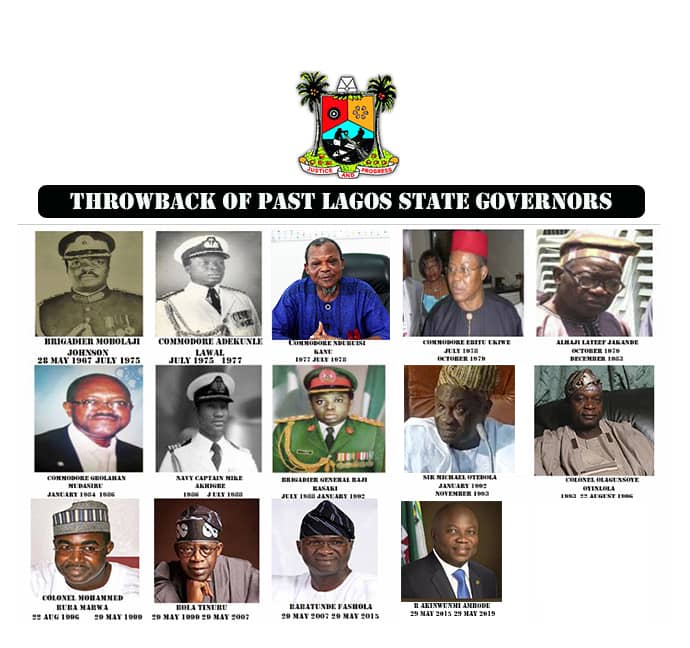
    Lagos State, established on May 27, 1967, has been governed by a series of administrators and governors, both military and civilian. Here’s a chronological list of these leaders:

    1. Brigadier Mobolaji Johnson (Military Administrator)
      Tenure: May 1967 – July 1975
    2. Commodore Adekunle Lawal (Military Administrator)
      Tenure: July 1975 – 1977
    3. Commodore Ndubuisi Kanu (Military Administrator)
      Tenure: 1977 – July 1978
    4. Commodore Ebitu Ukiwe (Military Administrator)
      Tenure: July 1978 – October 1979
    5. Alhaji Lateef Jakande (Civilian Governor)
      Tenure: October 1979 – December 1983
    6. Brigadier General Gbolahan Mudasiru (Military Governor)
      Tenure: January 1984 – August 1986
    7. Navy Captain Mike Akhigbe (Military Governor)
      Tenure: August 1986 – July 1988
    8. Brigadier General Raji Rasaki (Military Governor)
      Tenure: July 1988 – January 1992
    9. Sir Michael Otedola (Civilian Governor)
      Tenure: January 1992 – November 1993
    10. Colonel Olagunsoye Oyinlola (Military Administrator)
      Tenure: December 1993 – August 1996
    11. Colonel Mohammed Buba Marwa (Military Administrator)
      Tenure: August 1996 – May 1999
    12. Asiwaju Bola Ahmed Tinubu (Civilian Governor)
      Tenure: May 1999 – May 2007
    13. Babatunde Raji Fashola (Civilian Governor)
      Tenure: May 2007 – May 2015
    14. Akinwunmi Ambode (Civilian Governor)
      Tenure: May 2015 – May 2019
    15. Babajide Olusola Sanwo-Olu (Civilian Governor)
      Tenure: May 2019 – Present

    This list reflects the leadership transitions in Lagos State from its creation to the present day.

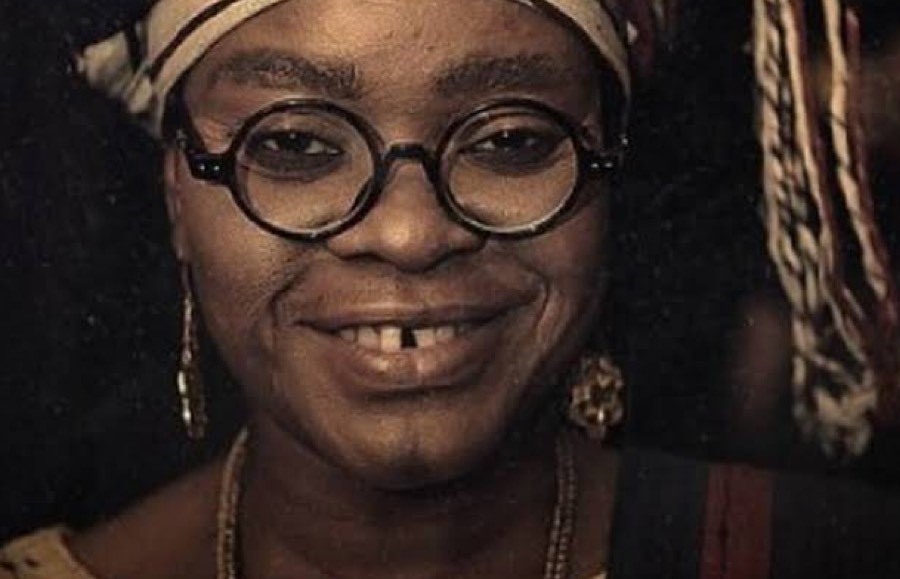
  • Funmilayo Ransome-Kuti: A Trailblazer for Women’s Rights in Nigeria

    Funmilayo Ransome-Kuti: A Trailblazer for Women’s Rights in Nigeria


    Funmilayo Ransome-Kuti: A Trailblazer for Women’s Rights in Nigeria

    Early Life & Education

    • Full Name: Francis Abigail Olufunmilayo Thomas
    • Born: October 25, 1900, in Abeokuta, Nigeria
    • Died: April 13, 1978
    • She was the first female student at Abeokuta Grammar School and later traveled to England for further studies.

    Career & Activism

    • Funmilayo was a teacher, political activist, and women’s rights advocate.
    • She played a key role in the fight against British colonial rule and gender discrimination.
    • She founded the Abeokuta Women’s Union (AWU) in the 1940s, which became one of the most influential women’s organizations in Nigeria.
    • She led protests against unfair taxation policies targeting women, forcing the abdication of the Alake (traditional ruler) of Abeokuta in 1949.
    • She was an anti-colonial activist, working alongside figures like Kwame Nkrumah and advocating for Nigerian independence.

    Personal Life & Influence on Fela Kuti

    • She married Israel Oludotun Ransome-Kuti, a prominent educator and clergyman, and had four children, including Fela Anikulapo Kuti.
    • Funmilayo’s activism and bold stance against injustice strongly influenced Fela’s rebellious political music.
    • In 1977, during a military raid on Fela’s Kalakuta Republic, she was thrown from a window, sustaining fatal injuries. She died in 1978.

    Legacy

    • She was the first Nigerian woman to drive a car.
    • She fought for women’s voting rights and was a key figure in Nigeria’s early feminist movement.
    • In 2012, she was posthumously honored with the Centenary Award for Pioneering Women’s Rights in Nigeria.
    • She remains a symbol of resilience and activism in Nigeria’s history.


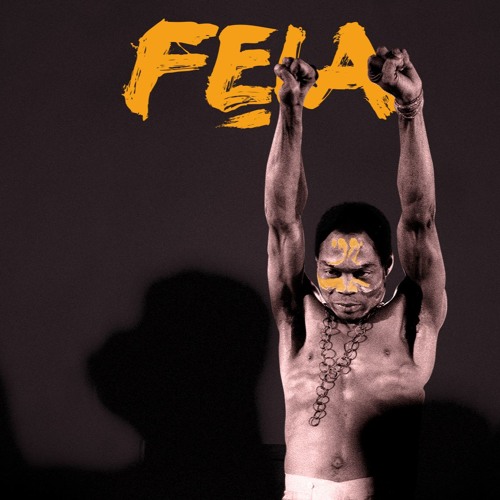
  • Fela Kuti: History, Education, Mother, Children, and Grammy Recognition

    Fela Kuti: History, Education, Mother, Children, and Grammy Recognition


    Fela Kuti: History, Education, Mother, Children, and Grammy Recognition

    History & Background

    Fela Anikulapo Kuti (1938–1997) was a Nigerian musician, composer, and political activist, widely regarded as the pioneer of Afrobeat—a fusion of jazz, funk, highlife, and traditional African rhythms. His music was heavily political, criticizing corruption, military rule, and social injustices in Nigeria.

    Education

    • Fela was born in Abeokuta, Nigeria, into a prominent family.
    • He attended Abeokuta Grammar School before traveling to London in 1958 to study medicine.
    • Instead, he chose music and enrolled at Trinity College of Music, London, where he studied classical music and jazz.
    • After returning to Nigeria in the 1960s, he formed the band Koola Lobitos, which later evolved into Africa ‘70 and then Egypt ‘80.

    Mother: Funmilayo Ransome-Kuti

    • Fela’s mother, Funmilayo Ransome-Kuti, was a pioneering feminist and activist who fought for women’s rights and against British colonial rule.
    • She played a significant role in shaping his political consciousness.
    • In 1978, during a military raid on Fela’s commune (Kalakuta Republic), she was thrown from a window, later dying from her injuries. This deeply affected Fela and influenced his song “Unknown Soldier”.

    Children

    • Fela Kuti had multiple wives (he married 27 women in 1978, though later divorced most of them).
    • Some of his notable children include:
      • Femi Kuti – A successful Afrobeat musician and activist.
      • Seun Kuti – Leads his father’s former band, Egypt 80, and continues the Afrobeat legacy.
      • Yeni Kuti – A dancer, activist, and co-founder of the New Afrika Shrine.

    Grammy Recognition

    • Despite his global influence, Fela Kuti never won a Grammy Award.
    • However, he was posthumously nominated for a Grammy Award in 2021 when his name appeared on the Rock & Roll Hall of Fame nominees list.
    • His son Femi Kuti and grandson Made Kuti have received Grammy nominations for their Afrobeat albums.


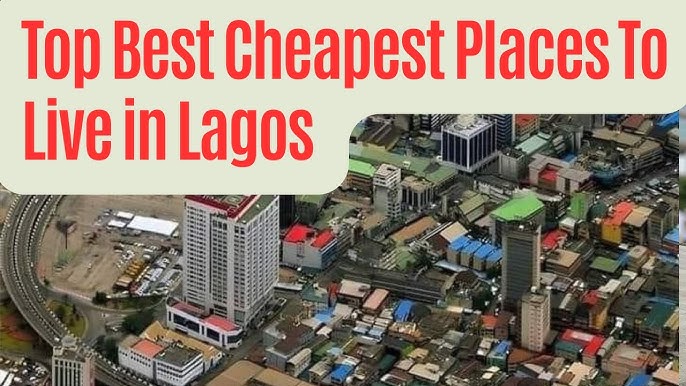
  • Most Affordable Places To Live In Lagos , Nigeria

    Most Affordable Places To Live In Lagos , Nigeria


    Lagos, Nigeria, offers several neighborhoods that are considered more affordable for residents. Here are some of the most budget-friendly areas:

    1. Ajegunle

    Ajegunle is known for being one of the most affordable neighborhoods in Lagos, offering budget-friendly accommodation for those who need to keep living costs low. Despite its reputation as a working-class area, Ajegunle is rich in culture, vibrant street life, and close-knit communities. It is located in the Ajeromi-Ifelodun local government area of Lagos. Rent in Ajegunle is significantly lower than in many other Lagos neighborhoods. A one-bedroom apartment can be rented for between ₦150,000 and ₦250,000 annually, while a two-bedroom apartment can cost between ₦250,000 and ₦400,000 per year.

    2. Ikotun

    Ikotun, located in the Alimosho Local Government Area, is another affordable neighborhood in Lagos that offers both residential and commercial properties. This area is popular among working-class individuals and families due to its affordability and growing infrastructure. As one of the more accessible areas in Lagos, Ikotun is seeing rapid growth, making it an attractive choice for those seeking budget-friendly housing.

    3. Agege

    Agege is a bustling, affordable neighborhood located in the western part of Lagos. Known for its strong community atmosphere and active street life, Agege offers affordable housing options, especially for those who prefer to live in close proximity to Lagos’ commercial and industrial hubs. While Agege is considered one of the more affordable areas in Lagos, it is also home to a rapidly growing population.

    4. Ikorodu

    Ikorodu is one of the six locations identified as affordable areas in Lagos. According to a market report by Estate Intel, the average rent for a one-bedroom apartment in Ikorodu is around ₦220,000 per annum.

    5. Egbeda

    Egbeda is another affordable area in Lagos. The average rent for a one-bedroom apartment in Egbeda is approximately ₦240,000 per annum.

    6. Ojo

    Ojo is listed among the affordable areas in Lagos, with average rents for a one-bedroom apartment around ₦325,000 per annum.

    7. Alagbado

    Alagbado is also considered an affordable area in Lagos, with average rents for a one-bedroom apartment around ₦270,000 per annum.

    These neighborhoods offer more budget-friendly housing options compared to other parts of Lagos. However, it’s important to consider factors such as proximity to your workplace, access to amenities, and transportation costs when choosing a place to live.


  • some common modes of getting married in Afro-Caribbean nations

    some common modes of getting married in Afro-Caribbean nations

    Marriage customs in Afro-Caribbean nations are a blend of African, European, and indigenous traditions, with variations depending on the country and cultural influences. Here are some common modes of getting married in these nations:

    1. Traditional Marriages
    Some communities incorporate African ancestral traditions, including symbolic rituals such as libations, blessings from elders, and cultural music and dance.
    In some countries like Haiti and Jamaica, traditional spiritual ceremonies, including those influenced by Vodou or Rastafarian beliefs, may be performed.
    2. Legal/Civil Marriages
    Couples may opt for a government-recognized marriage performed at a registry office.
    This type of marriage is usually simple, requiring witnesses and an officiant.
    3. Religious Marriages
    Christian weddings (Catholic, Protestant, Anglican, or Pentecostal) are common due to the strong European religious influence.
    Hindu and Muslim weddings are also performed in countries with Indo-Caribbean populations, such as Trinidad and Guyana.
    Some Afro-Caribbean couples may incorporate African spiritual elements into their Christian ceremonies.
    4. Common-Law Unions
    In some parts of the Caribbean, long-term cohabitation is recognized as a legal relationship.
    These unions are particularly common in countries like Jamaica, where formal marriage rates are lower.
    5. Elopement or Private Ceremonies
    Some couples choose to have private weddings with minimal guests, sometimes on beaches or in resorts, especially in tourism-driven nations like the Bahamas and Barbados.
    6. Cultural Wedding Ceremonies
    Afro-Caribbean weddings often feature vibrant celebrations with drumming, dancing, and feasting.
    In some regions, couples perform the “jumping the broom” ritual, a tradition with African roots symbolizing the beginning of a new life together.

  • Dave Here’s a breakdown of the details you requested

    Dave Here’s a breakdown of the details you requested


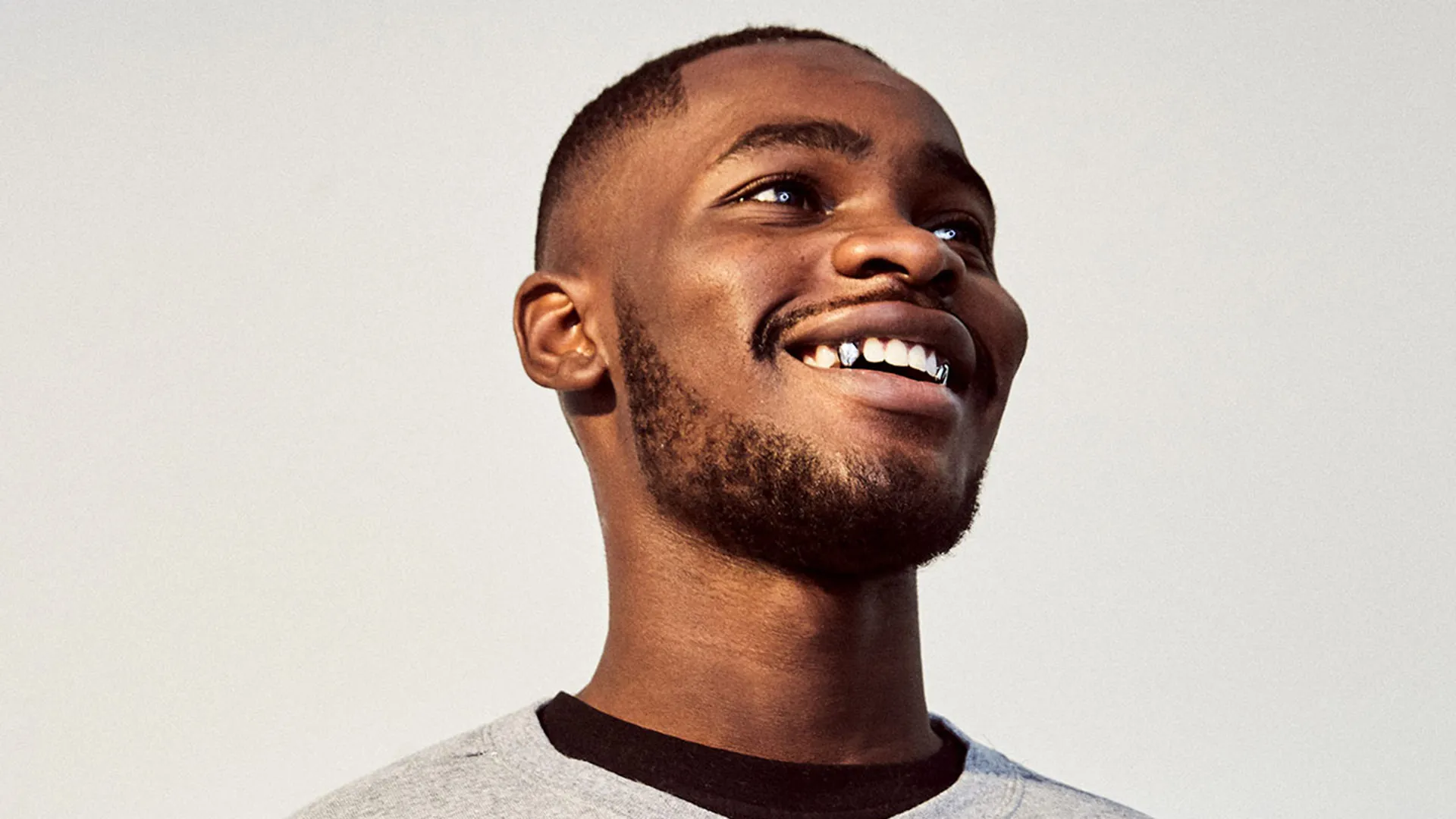
    Dave, the British rapper, singer, songwriter, and actor. Here’s a breakdown of the details you requested:

    Full Name & Origin

    • Real Name: David Orobosa Omoregie
    • Origin: Born on June 5, 1998, in Brixton, London, to Nigerian parents of Edo descent.

    Net Worth

    • As of 2024, Dave’s estimated net worth is around $5–$10 million, primarily earned from music sales, tours, brand endorsements, and acting roles.

    Education

    • Studied Philosophy, Ethics, and Law at Richmond upon Thames College.
    • He was also accepted into De Montfort University to study law but decided to focus on music instead.

    Lifestyle

    • Dave is known for his low-key and private lifestyle, despite his fame.
    • He invests in real estate, fashion, and tech, often avoiding flashy public displays of wealth.
    • He is passionate about mental health awareness, politics, and social justice.

    Cars

    While Dave doesn’t show off his cars as much as other rappers, he has been seen with:

    • Lamborghini Urus
    • Mercedes-AMG G63 (G-Wagon)
    • Rolls-Royce Wraith
    • Audi RS7